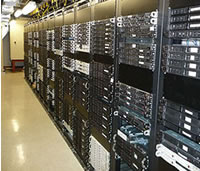
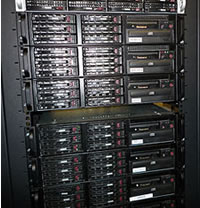
Our network is comprised of two Cisco 6509s with 10G uplinks running at the core. The 6509's are fully redundant and running iBGP and HSRP. If one fails, the other is able to take on the full load of the network.
We have multiple gigE fiber optic (1000Mbit/s) connections from the worlds leading telecommunications companies. With multiple GigE connections, this allows for the high bandwidth that is required for even the most bandwidth intensive programs needed to stay competitive in the ever changing World Wide Web.
We also have public and private peering agreements with over 400 ISPs all over the world. We get our IP transit Global Crossing, Mzima, Internap and PCCW via multiple gigabit fiber uplinks to our core routers/switches. If all but 1 provider fails, there is no change to our network, as we can serve our full client base with one provider, as we leave that much room on every connection. The core switches are connected to two separate distribution switches (2 Cisco 3560-E 10G switches). From the distribution switches, we connect to an edge switch (Cisco 3500 series). Each cabinet is pre-wired and connected to our main distribution cabinet, so it's plug and play. Each cabinet has it's own switch, as we prefer a layer 2 switch in each cabinet.
All of our servers are hooked up to APC remote reboot ports in the event that they lockup for any reason. All of the servers are protected by state-of-the-art hardware firewalls, where we have Cisco PIX for the network, as well as additional software firewalls for the servers. Everything is logged and routinely scanned by our system administrators.